


Chemistry and process engineering
Products of technical ceramics are chemical resistant, corrosion free, high temperature resistant and thermal and electric isolating. Due to these material characteristics and also due to the production possibility of threedimensional geometries, Ceramic-Injection molded products are perfectly suitable for different applications for the chemistry and process engineering and are offering total new possibilities and applications.
Examples of products for Chemistry and process engineering
Laboratory -Pots Al2O3
The extrem high temperature, chemical, alkali and corrosive resistance of high-purity Aluminiumoxide makes this material predestined to be used for laboratory equipement like pots, zylinders or retort boxes, especially then, when aggressive materials like bases are in use.

| Application / Function | Isolating |
| Additional funtions | Protection, … |
| Material | Aluminiumoxid |
| Dimensions |
Ø 12 mm; deep 9,5 mm; |
Special features:
- biocompatible
- chemical resistant
- alkali resistance
- high temperature resistance
- non corrosive
Porous ceramics
In general, a pore in ceramic material is considered as defective spot. However, in the form of filters or membranes, porous ceramics are particularly used in a variety of applications in chemistry, pharmacy and process technology. Foamed, pressed or extruded components are, however, limited in terms of the geometric shape.
With their newly developed compound and the corresponding processing technology, Kläger now also offers components with the “porous” property profile for the injection molding method in order to realize three-dimensional component geometries.

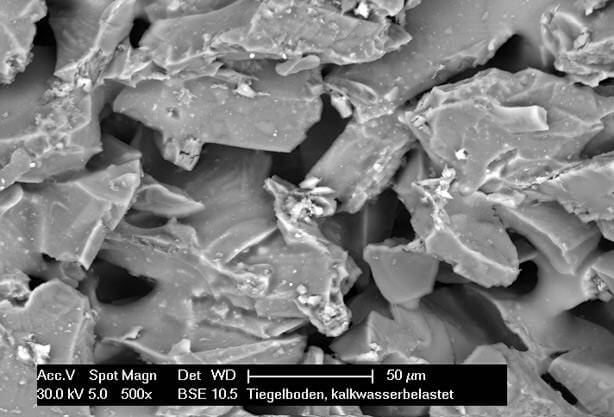
| Porosity | open approx.. 30 % adjustable |
| Pore size | approx.. 10 µm adjustable |
| Material | Basis Al2O3
individual developed Compound |
| Process utilities | Water, Gases, Bases |
| Flow rate compressed air (3bar) | approx. 26 L/min. |
| Axial fracture strentgh | ca. 2200 N |
Special features:
- chemical resitant
- non corrosive
- high temperature resistant
- electrical isolating
- straightness
Possible fields of application:
- Crucible
- Filter
- Katalysatoren
- Membrane